
Don't Starve Together
PlaydigiousAdventure
4.0121.00 Reviews
- Version
- 1.4.0
- Installs
- 10.00K
- Age Rating
- Teen
Screenshots
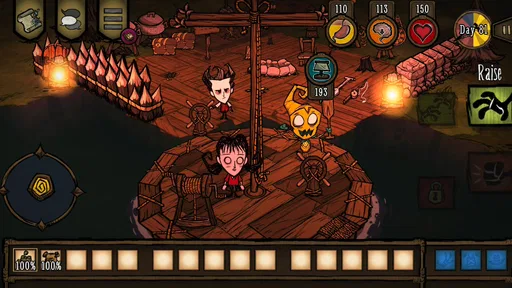
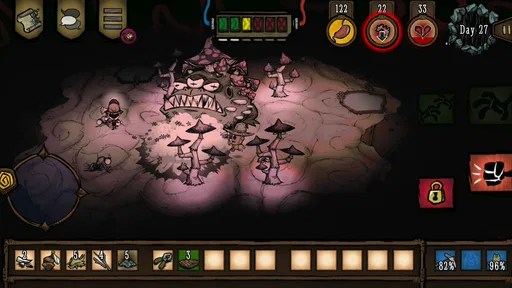
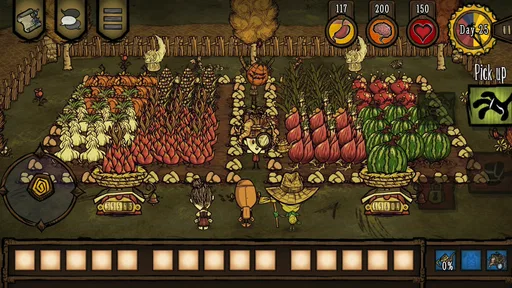
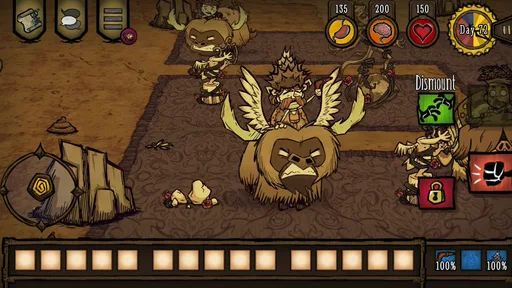
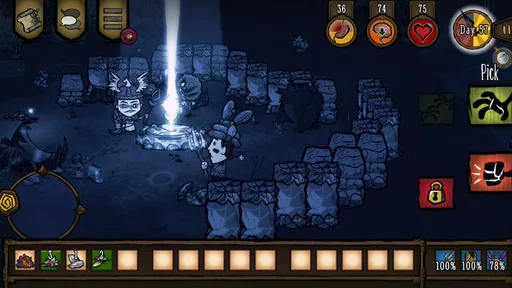
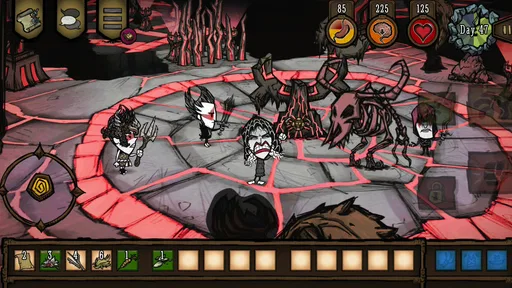
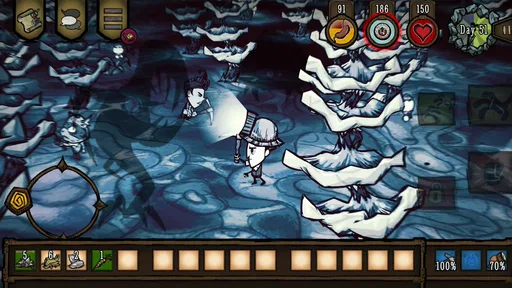
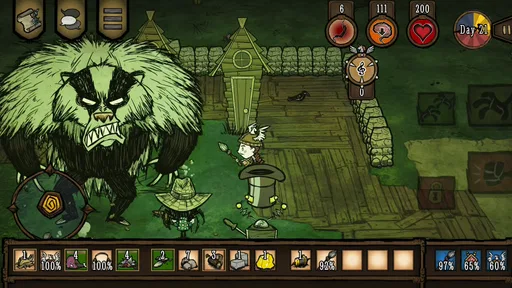
Our Review of Don't Starve Together
 Analysis by Appyee
I approached Don't Starve Together as the sort of game that can turn a quiet evening into a shared household project. It is an adventure game from Playdigious, but its real appeal is not simply exploring a strange wilderness. The interesting part is deciding who gathers, who builds, who takes risks, and who remembers that winter preparation matters before the weather becomes a problem. I found it much more rewarding when treated as a conversation between players rather than as something to rush through alone.
The mobile edition is aimed at players who want the survival experience in a portable format, with a Teen content rating and a price of $9.99. It has an average rating of 4.0 from around 2.6 thousand ratings, and the game has passed 10 thousand installs. Those figures suggest a reasonably established mobile audience, although they also set a fair expectation: this is a specialized survival game, not a universally comfortable pick for every casual player.
My overall impression is positive, with an important qualification. This is best when everyone sharing the session understands that survival depends on cooperation, preparation, and patience. If one person wants a relaxed adventure while another keeps taking supplies and wandering away, the experience can become tiring quickly. The game does not remove that social friction; it makes it part of the challenge.
Why a shared household session can work so well
A realistic use case is a household with one compatible mobile device available during a short evening break. One player can handle immediate exploration while another watches resources, discusses priorities, and helps decide whether it is worth returning to camp. Even when only one person is holding the device, the decisions are easy to discuss aloud. That makes the game feel more like a shared puzzle than a solitary touch-screen activity.
For a group with access to multiplayer play, the benefit is more direct. Tasks can be divided according to personality: the cautious player can focus on food and shelter, the curious player can investigate unfamiliar areas, and the practical player can keep the base organized. I like that these roles are not merely cosmetic. A poor division of work has consequences, while a sensible plan makes the world feel manageable.
The strongest household moments tend to come from small decisions rather than dramatic victories. Do you spend a scarce item now, or save it for a more difficult period? Is it safe for someone to travel farther from camp? Should the group improve the base, or prepare for the next environmental threat? These questions give even a short session a clear purpose.
There is also a useful contrast between playing with close friends and playing with people who do not know your habits. With friends or family, mistakes can become funny stories. With unfamiliar players, the same mistake may feel like wasted time. I would therefore choose this for a household that already enjoys discussing games, not for people who want a frictionless pick-up-and-play experience.
The game rewards complementary habits
I noticed that the best cooperation does not come from having everyone do the same thing. A group of explorers may discover plenty but return without enough supplies. A group of cautious gatherers may build a secure routine but miss opportunities. The game works better when players recognize these differences and make them useful.
That creates a practical tip for shared-device play: agree on the immediate objective before starting a risky activity. “Find food,” “improve camp,” and “look for a safer route” are very different goals. Saying which one matters most prevents several people from spending the same resources or leaving the base unprepared.
Another non-obvious strength is how naturally the game creates teachable moments. A younger or less experienced player can learn why planning matters by seeing the result of a rushed decision. At the same time, adults should remember that this is not a gentle educational sandbox. The atmosphere can be unsettling, and failure may arrive after a long period of careful work.
Setting up a fair boundary around the device
Because this is a paid game, the first household decision is simple: decide who owns the purchase and who is allowed to use it. The listed price is $9.99, while optional in-app purchases range from $2.99 to $49.99 per item. That makes it sensible to discuss spending before handing the device to a child or guest. I would not assume that everyone using the device understands the difference between the initial purchase and optional purchases.
That conversation is especially important when several people share one phone or tablet. A clear rule such as “ask before buying anything” is more useful than expecting every player to make the same judgment. It also avoids confusion when one person thinks the game is finished after the initial purchase while another notices additional items during play.
The game requires Android 8.0 or later, so compatibility should be checked before planning a shared session. This matters more in a household with an older spare phone or tablet. A device that cannot run the game should not become the center of a family argument, and it is better to check the operating-system requirement before spending money.
I also recommend agreeing on a session length. Survival games can encourage “one more task,” especially after a difficult setback. On a shared device, that can quietly turn into one person controlling the evening. A simple rotation works well: one player makes the main decisions for a while, then the device changes hands at a natural stopping point, such as returning to camp or finishing a planned objective.
There is a trade-off here. A single shared device makes the game social, but it can also make control uneven. The person holding the screen has the final say in movement and timing. If that bothers the group, multiplayer access with separate devices may be a better arrangement; if not, the shared-device format can be surprisingly engaging because everyone stays involved in the discussion.
Keep the account boundary clear
I would keep personal accounts and household play habits separate in conversation, even if the device itself is shared. The important point is not to assume that a guest should use another person’s account, purchases, or progress without permission. Before starting, decide whether the session is a communal experiment or someone’s personal run.
This distinction changes how people treat failure. In a communal run, restarting may be acceptable if everyone agrees. In a personal run, another player should not make a risky decision merely because they want to see what happens. That small boundary prevents a lot of resentment and does not require any invented family feature or special control system.
The current version is 1.4.0, and I would still make a habit of checking that the installed copy is ready before arranging a group session. Nobody wants the first ten minutes of a planned evening spent dealing with a version mismatch or setup interruption. The practical lesson is simple: prepare the device first, then invite everyone to play.
Coordination is the real difficulty
Many survival games can be played as a personal routine: gather, craft, explore, repeat. Here, that routine becomes a negotiation when other people are involved. The group must agree on what deserves attention now and what can wait. I found that a short spoken plan is often more valuable than trying to improvise every decision once danger appears.
A useful household method is to give each player a narrow responsibility for the next stretch of play. One person watches the base, another gathers a particular kind of resource, and another explores only within an agreed limit. The assignments do not need to be permanent. Their purpose is to reduce duplicated effort and stop everyone from assuming someone else handled the essential work.
Communication also matters when a player wants to take a risk. Before leaving safety, say what you are looking for and when you plan to return. That sounds obvious, but it prevents the classic multiplayer problem in which one person disappears while the rest of the group prepares for a threat that may never arrive. The game’s tension becomes more enjoyable when the risk is deliberate.
For younger players, an adult can turn this into a simple planning exercise: ask what the group needs, what might go wrong, and what should be saved. I would avoid presenting it as a lesson every time, though. Children may enjoy the freedom to make a poor decision and learn from it. The best guidance is usually a question rather than an order.
When coordination breaks down
The game is less suitable for a group that dislikes shared responsibility. A player who repeatedly consumes supplies, ignores the agreed plan, or treats the base as someone else’s problem can make the session feel like supervision. In that situation, a more straightforward adventure game may be a better household choice.
There is also a difference between playful chaos and exhausting chaos. A surprising mistake can be memorable; constant interruption is not. I found that the experience improves when the group accepts a few house rules, such as not changing the plan without saying so and not taking important resources for a private experiment. These rules are not part of the game’s systems; they are simply sensible ways to protect the shared experience.
One of my favorite practical insights is that the best stopping point is often before the group is completely exhausted. Ending after a successful return to camp preserves the feeling of progress. Ending only after a disaster can make the game seem harsher than it needs to be. This is particularly useful with children or mixed-age groups, where frustration can outlast the actual session.
Age, trust, and the tone of the experience
The Teen rating deserves attention in a household setting. The game’s spooky survival atmosphere is not the same as a bright, harmless crafting game. Even if a player is comfortable with fantasy danger, the mood can still be too tense for someone who prefers gentle exploration. I would show a new player the style of play first and let them decide whether the tone suits them.
Adults should also consider how a child reacts to loss. Survival games often make failure feel personal because time and effort have been invested in preparation. That can be motivating for one player and upsetting for another. If the child becomes angry after a setback, the right response may be to pause rather than immediately begin another attempt.
Trust works both ways. A younger player should know that an adult will not quietly take over every decision, while the adult should know that the child understands the household rules around purchases and shared progress. The game can support a positive cooperative routine, but it cannot replace those conversations.
I would be cautious about presenting the game as suitable for every family simply because it is available on a phone. Portability makes access easier, not the content gentler. The Teen rating, spooky presentation, and demanding survival structure all point toward a player who can handle tension and accept that progress may not always be comfortable.
Who should choose it, and who should skip it?
I recommend it to households that enjoy planning together, debating choices, and laughing at mistakes after the fact. It is particularly appealing when players want an adventure with consequences rather than a sequence of clearly marked objectives. The multiplayer focus gives ordinary resource decisions a social weight that many solo adventure games do not have.
I would skip it for someone looking for a calm game to play in very short, disconnected bursts. I would also look elsewhere if the main goal is a polished story with predictable pacing, or if the intended audience dislikes spooky settings. A conventional adventure game may be kinder when the player wants exploration without the pressure of maintaining survival routines.
Compared with a typical crafting game, this one asks more from the group’s memory and communication. Compared with a conventional multiplayer adventure, it gives less protection from bad planning. That is its identity, not a flaw to be patched away, but it explains why the game can feel demanding even when the controls themselves seem manageable.
My household verdict
After considering it as a shared mobile experience, I see Don't Starve Together as a strong choice for the right household rather than a universal recommendation. Playdigious has brought a recognizable survival-adventure format to a portable audience, but the value comes from how players organize themselves. The game is most satisfying when everyone understands that cooperation is active work, not merely standing in the same world.
The purchase price makes the initial decision fairly clear, while the optional item range means adults should set spending expectations before shared use begins. The Android requirement also makes a quick compatibility check worthwhile. These are small practical details, but they matter when a game is being introduced into a household rather than chosen by one private player.
My preferred setup would be a planned session with a clear device rotation, a spoken objective, and an agreement about purchases and personal progress. I would start with a short play period, especially for a younger or cautious player, then see whether the atmosphere and failure style feel enjoyable. If the group starts discussing resources and routes instead of arguing over control, that is a good sign.
The game is currently listed for Teen audiences and has a 4.0 average, which matches my balanced view: there is a lot to appreciate, but the experience is not effortless. Its survival pressure, spooky tone, and need for coordination can be exactly what makes it memorable, or exactly what makes it unsuitable.
For friends or family who want a cooperative challenge and are willing to plan together, I would recommend giving it a fair try. For a household wanting a relaxed, instantly understandable adventure, I would choose something gentler. The deciding question is not whether the game can be shared, but whether the people sharing it enjoy making difficult decisions together.
Verdict
Strengths of Don't Starve Together
- Distinctive art style and atmospheric world make exploration memorable.
- Deep crafting system rewards experimentation and careful resource management.
- Cooperative multiplayer makes survival more engaging with friends.
- Frequent seasonal threats and events keep each world feeling unpredictable.
- Many playable characters offer different abilities and survival strategies.
Limitations of Don't Starve Together
- Steep learning curve can make the first few in-game days frustrating.
- Deaths may erase significant progress, especially for inexperienced players.
- Requires reliable internet access for its multiplayer-focused experience.
- Long sessions can feel repetitive when gathering the same essential resources.
- Some character and content options may require additional purchases or progression.
Other Releases by Playdigious
View All


Similar Picks in This Category
View All
Roblox
Roblox Corporation4.2

Pokémon GO
Niantic, Inc.3.5

Ninja warrior: legend of adven
TOH Games4.6

Ninja Arashi
Black Panther4.6

Eyes - The Horror Game
Fearless Games sp. j.4.5

Critical Action:Gun Strike Ops
FPS Shooter & Action Game4.3
Frequently Asked Questions
What is Don’t Starve Together, and how does its multiplayer survival gameplay work?
Don’t Starve Together is a cooperative survival game in which you and other players explore a strange wilderness, collect resources, craft tools, build a base, and fight dangerous creatures. Each character has different strengths and weaknesses, while hunger, health, and sanity must be managed carefully. You can play with friends online, join public servers, or create a private world for a more controlled experience.
Can I play Don’t Starve Together alone, or is it only designed for groups?
Although Don’t Starve Together is built around cooperative multiplayer, it can also be played solo. Playing alone gives you complete control over resources, exploration, and base building, but survival can feel more demanding because there are no teammates to share tasks or revive you. The game is still enjoyable for solo players who prefer a slower, more challenging survival experience.
Is Don’t Starve Together suitable for beginners, and does it include a tutorial?
Don’t Starve Together can be difficult for new players because it explains only the basic controls and leaves many mechanics for you to discover. You will need to learn how seasons, creatures, sanity, crafting, and world events work through experimentation. Beginners should expect to die several times while learning, although online guides, experienced friends, and community servers can make the early experience much easier.
Does Don’t Starve Together support cross-platform play between Android, iOS, PC, and consoles?
Cross-platform availability depends on the specific version you download and the platform ecosystem it belongs to. Don’t Starve Together is commonly available on PC and consoles, while mobile availability and multiplayer compatibility may differ by region or edition. Before purchasing or downloading, check the official store listing carefully to confirm supported devices, online features, account requirements, and whether your friends can join from another platform.
What device and internet requirements should I know before downloading Don’t Starve Together?
The game requires a compatible device with enough free storage, memory, and processing power to handle its constantly changing world. Online multiplayer also needs a stable internet connection, especially when several players, creatures, and large bases are active at once. Performance may vary depending on the device, world size, and number of players, so checking the current official system requirements is recommended before installation.
Play our best games!


